Department
From Head of the Department
About Department
Public Finance programme provides students with a profound understanding of the key concepts and the principles of public finance. Through the acquisition of necessary tools and skills, students gain the ability to conduct research on issues related to public expenditures, taxation system, public debt management, and broadly on economic, social, and regulative role of the state in the era of globalization.
History
The Faculty of Economics was established in 1936 and started its academic activities in 1937. In the early years of the Faculty, instead of separate departments, courses were taught under the roof of the Faculty of Economics. According to the integrated education program, the courses of economics of the first year were: ‘Economic Theory’; ‘Economic Geography’; ‘The Structure of Turkish Economics’; ‘Economic and Social History’. Also, for the first time in the curriculum, the courses given in economics were as follows: 'Structure of Turkish Economy'; 'Economic and Social History'; 'History of Economic Doctrines'; 'International Trade’; 'Conjuncture and Depressions’ ‘Politics of Agriculture and Industry'; 'Transportation Economy'; ' Economic Systems and Rural Affairs’; 'The History Of Turkish Public Finance'. In the aforementioned education system, undergraduates were first meet with a 5-hour Public Finance lecture given by Ord. Professor Dr. İbrahim Fazıl Pelin in their 3rd grade.
After the implementation of the integrative education program, 8 departments were established with the decision of the Faculty administration. One of these departments was General Economics and Public Finance Theory under the presidency of Ord. Prof. Dr. Fritz Neumark and the other one was Public Finance and Fiscal Law under the presidency of Ord. Prof. Dr. İbrahim Fazıl Pelin. By the year 1952, application of “class” system was rescinded in the Faculty and in place of that, 3 parts and 5 disciplinary system practice was introduced, and one of those 5 disciplines was Discipline of Public Finance. In conjunction with the “semester” procedure that introduced in 1960, courses of Public Finance Discipline was carried out in 5th, 6th and 7th, 8th semesters.


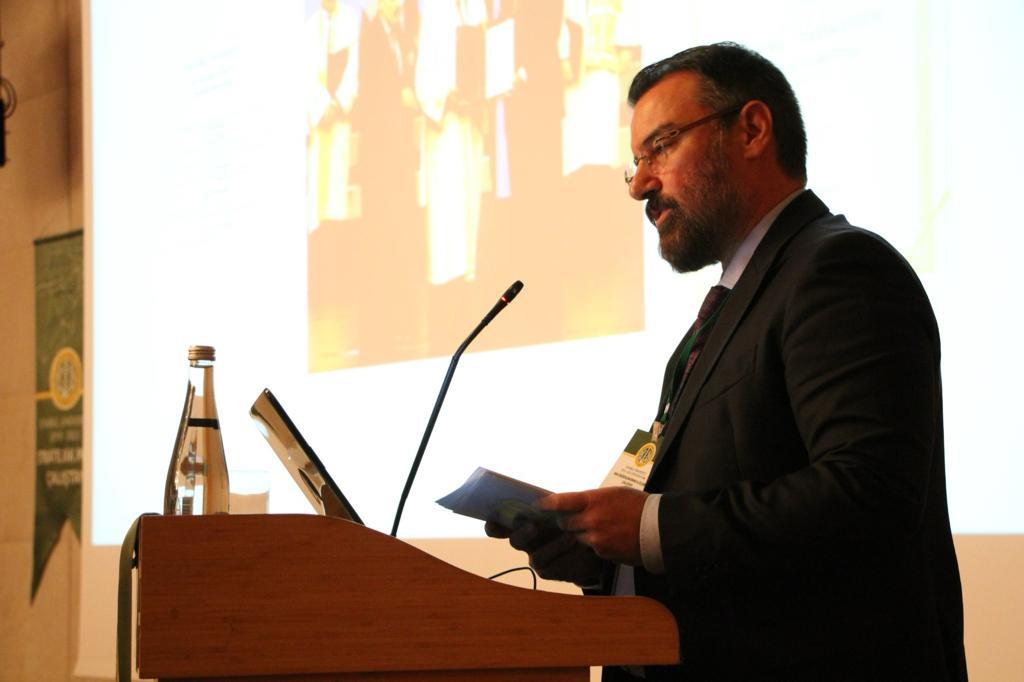
Academic Board of Management Meeting
The second half of 1990s, Public Finance Library.
Mission and Vision
Department of Public Finance provides students with solid theoretical ground on public finance in particular and economics in general. The theoretical competence is accompanied with practical issues that help students gain experience in problem solving and developing of different views through comparative analysis. Students gain the ability and acquire the advanced skills related to research methods and accomplish the tasks they face in the real world economic issues. Following the successful completion of the degree programme in the Department of Public Finance, our graduates are expected to be qualified perfectly in order to be the pioneers to steer the economic policies.
In the Department of Public Finance, it is aimed to provide the students with the necessary knowledge required for management positions in public and private institutions after graduation. In line with this purpose, the endeavour is to improve the questioning and the analysing skills of the students. Our graduates are perfect candidates for positions as tax inspector, accountancy controller, Court of Accounts auditor, tax court judge, administrative judge, budget expertise, capital market expertise, fiscal consultant, certified public accountant, bank inspector, and also various positions in the private sector. Therefore, alumni of the department have a wide range of choices for employment ranging from private to public sector. Our graduates hold leading positions in professional occupations, and shape economic and social life.
Emeritus
| Faculty Member | |||
| Ord. Prof. Dr. İbrahim Fazıl PELİN | 1936 | - | 1944 |
| Ord. Prof. Dr. Fritz NEUMARK | 1936 | - | 1952 |
| Prof. Dr. Bedii FEYZİOĞLU | 1950 | - | 1987 |
| Prof. Dr. Memduh YAŞA | 1953 | - | 1983 |
| Prof. Dr. Sevim GÖRGÜN | 1953 | - | 1979 |
| Prof. Dr. Arif NEMLİ | 1953 | - | 2000 |
| Prof. Dr. Kenan BULUTOĞLU | 1957 | - | 1982 |
| Prof. Dr. Şerafettin AKSOY | 1963 | - | 2003 |
| Prof. Dr. Türkan ÖNCEL | 1963 | - | 2003 |
| Prof. Dr. İzzettin ÖNDER | 1964 | - | 2007 |
| Prof. Dr. Yenal ÖNCEL | 1964 | - | 2005 |
| Prof. Dr. Salih TURHAN | 1966 | - | 2001 |
| Prof. Dr. Bora OCAKCIOĞLU | 1967 | - | 1998 |
| Prof. Dr. Nihat FALAY | 1969 | - | 2008 |
| Prof. Dr. Esfender KORKMAZ | 1976 | - | 2007 |
| Prof. Dr. Tülay ARIN | 1976 | - | 2004 |
| Prof. Dr. Eser KARAKAŞ | 1982 | - | 2016 |
| Prof. Dr. Hülya KİRMANOĞLU | 1982 | - | 2014 |
| Prof. Dr. K. Pınar AKKOYUNLU | 1982 | - | 2019 |
| Prof. Dr. Elif SONSUZOĞLU | 1986 | - | 2015 |
| Prof. Dr. Emine Figen ALTUĞ | 2006 | - | 2019 |
| Assoc. Prof. Dr. Burhan ŞENATALAR | 1969 | - | 1979 |
| Asst. Prof. Dr. Metin TARIM | 1976 | - | 1985 |
| Asst. Prof. Dr. Şamil ÜNSAL | 1982 | - | 2019 |
| Asst. Dr. Ali Suat ÜRGÜPLÜ | 1968 | - | 1971 |
| Asst. Pertev BİLGEN | 1958 | - | 1962 |
| Asst. Levent ÇAKMUR | 1965 | - | 1969 |
| Asst. Mehmet Emin Dursun URAL | 1971 | - | 1985 |
| Asst. Zehra TURHAN | 1980 | - | 1981 |
| Asst. İl-Han ÖZAY | --- | --- | |
| Asst. Kısmet ERKİNER | 1967 | - | 1971 |
| Res. Asst. Fatoş Yeşim KARTALLI | 1986 | - | 1994 |
| Res. Asst. Kaan TUNCELİ | 1989 | - | 2002 |
| Res. Asst. Göksel AŞAN | 1989 | - | 1998 |
| Res. Asst. Esra OLCAR | 1992 | - | 1996 |
| Res. Asst. Berna Gülriz HARATOKA | 1994 | - | 1996 |
| Res. Asst. Emine Elif ŞİMŞEK | 1999 | - | 2006 |
| Lecturer Esat TEKELİ | 1952 | - | 1966 |
| Lecturer Recep TURGAY | 1967 | - | 1970 |
Public Finance programme provides students with a profound understanding of the key concepts and the principles of public finance. Through the acquisition of necessary tools and skills, students gain the ability to conduct research on issues related to public expenditures, taxation system, public debt management, and broadly on economic, social, and regulative role of the state in the era of globalization.
The Faculty of Economics was established in 1936 and started its academic activities in 1937. In the early years of the Faculty, instead of separate departments, courses were taught under the roof of the Faculty of Economics. According to the integrated education program, the courses of economics of the first year were: ‘Economic Theory’; ‘Economic Geography’; ‘The Structure of Turkish Economics’; ‘Economic and Social History’. Also, for the first time in the curriculum, the courses given in economics were as follows: 'Structure of Turkish Economy'; 'Economic and Social History'; 'History of Economic Doctrines'; 'International Trade’; 'Conjuncture and Depressions’ ‘Politics of Agriculture and Industry'; 'Transportation Economy'; ' Economic Systems and Rural Affairs’; 'The History Of Turkish Public Finance'. In the aforementioned education system, undergraduates were first meet with a 5-hour Public Finance lecture given by Ord. Professor Dr. İbrahim Fazıl Pelin in their 3rd grade.
After the implementation of the integrative education program, 8 departments were established with the decision of the Faculty administration. One of these departments was General Economics and Public Finance Theory under the presidency of Ord. Prof. Dr. Fritz Neumark and the other one was Public Finance and Fiscal Law under the presidency of Ord. Prof. Dr. İbrahim Fazıl Pelin. By the year 1952, application of “class” system was rescinded in the Faculty and in place of that, 3 parts and 5 disciplinary system practice was introduced, and one of those 5 disciplines was Discipline of Public Finance. In conjunction with the “semester” procedure that introduced in 1960, courses of Public Finance Discipline was carried out in 5th, 6th and 7th, 8th semesters.
Academic Board of Management Meeting
The second half of 1990s, Public Finance Library.
Department of Public Finance provides students with solid theoretical ground on public finance in particular and economics in general. The theoretical competence is accompanied with practical issues that help students gain experience in problem solving and developing of different views through comparative analysis. Students gain the ability and acquire the advanced skills related to research methods and accomplish the tasks they face in the real world economic issues. Following the successful completion of the degree programme in the Department of Public Finance, our graduates are expected to be qualified perfectly in order to be the pioneers to steer the economic policies.
In the Department of Public Finance, it is aimed to provide the students with the necessary knowledge required for management positions in public and private institutions after graduation. In line with this purpose, the endeavour is to improve the questioning and the analysing skills of the students. Our graduates are perfect candidates for positions as tax inspector, accountancy controller, Court of Accounts auditor, tax court judge, administrative judge, budget expertise, capital market expertise, fiscal consultant, certified public accountant, bank inspector, and also various positions in the private sector. Therefore, alumni of the department have a wide range of choices for employment ranging from private to public sector. Our graduates hold leading positions in professional occupations, and shape economic and social life.
| Faculty Member | |||
| Ord. Prof. Dr. İbrahim Fazıl PELİN | 1936 | - | 1944 |
| Ord. Prof. Dr. Fritz NEUMARK | 1936 | - | 1952 |
| Prof. Dr. Bedii FEYZİOĞLU | 1950 | - | 1987 |
| Prof. Dr. Memduh YAŞA | 1953 | - | 1983 |
| Prof. Dr. Sevim GÖRGÜN | 1953 | - | 1979 |
| Prof. Dr. Arif NEMLİ | 1953 | - | 2000 |
| Prof. Dr. Kenan BULUTOĞLU | 1957 | - | 1982 |
| Prof. Dr. Şerafettin AKSOY | 1963 | - | 2003 |
| Prof. Dr. Türkan ÖNCEL | 1963 | - | 2003 |
| Prof. Dr. İzzettin ÖNDER | 1964 | - | 2007 |
| Prof. Dr. Yenal ÖNCEL | 1964 | - | 2005 |
| Prof. Dr. Salih TURHAN | 1966 | - | 2001 |
| Prof. Dr. Bora OCAKCIOĞLU | 1967 | - | 1998 |
| Prof. Dr. Nihat FALAY | 1969 | - | 2008 |
| Prof. Dr. Esfender KORKMAZ | 1976 | - | 2007 |
| Prof. Dr. Tülay ARIN | 1976 | - | 2004 |
| Prof. Dr. Eser KARAKAŞ | 1982 | - | 2016 |
| Prof. Dr. Hülya KİRMANOĞLU | 1982 | - | 2014 |
| Prof. Dr. K. Pınar AKKOYUNLU | 1982 | - | 2019 |
| Prof. Dr. Elif SONSUZOĞLU | 1986 | - | 2015 |
| Prof. Dr. Emine Figen ALTUĞ | 2006 | - | 2019 |
| Assoc. Prof. Dr. Burhan ŞENATALAR | 1969 | - | 1979 |
| Asst. Prof. Dr. Metin TARIM | 1976 | - | 1985 |
| Asst. Prof. Dr. Şamil ÜNSAL | 1982 | - | 2019 |
| Asst. Dr. Ali Suat ÜRGÜPLÜ | 1968 | - | 1971 |
| Asst. Pertev BİLGEN | 1958 | - | 1962 |
| Asst. Levent ÇAKMUR | 1965 | - | 1969 |
| Asst. Mehmet Emin Dursun URAL | 1971 | - | 1985 |
| Asst. Zehra TURHAN | 1980 | - | 1981 |
| Asst. İl-Han ÖZAY | --- | --- | |
| Asst. Kısmet ERKİNER | 1967 | - | 1971 |
| Res. Asst. Fatoş Yeşim KARTALLI | 1986 | - | 1994 |
| Res. Asst. Kaan TUNCELİ | 1989 | - | 2002 |
| Res. Asst. Göksel AŞAN | 1989 | - | 1998 |
| Res. Asst. Esra OLCAR | 1992 | - | 1996 |
| Res. Asst. Berna Gülriz HARATOKA | 1994 | - | 1996 |
| Res. Asst. Emine Elif ŞİMŞEK | 1999 | - | 2006 |
| Lecturer Esat TEKELİ | 1952 | - | 1966 |
| Lecturer Recep TURGAY | 1967 | - | 1970 |